


The world of mobile esports is currently bracing for its most significant event as the international circuit moves toward the heart of Indonesia. For many decades, competitive gaming focused primarily on desktop platforms, but we are now entering a breathtaking era where mobile titles dominate global viewership.
The M7 World Championship in Jakarta represents the absolute pinnacle of this movement, bringing together the finest tactical minds from every major continent. This evolution means that the competition has moved beyond regional rivalries to become a true battle for total and absolute global supremacy.
Modern professional play in this discipline requires a masterclass in micro-management and lightning-fast decision-making that defines the highest level of human coordination. By analyzing the current favorites for the Jakarta stage, you can significantly enhance your appreciation for the sheer skill required to claim the trophy.
This article explores the essential pillars of the top contenders and how their journey to the M7 is changing the industry forever. You will discover the practical secrets that turn a talented squad into a powerful engine for global prestige and tactical perfection.
Let us explore the best path toward a more rewarding competitive life through the power of elite performance and strategic mastery.
The Unstoppable Momentum Of Indonesia’s Home Heroes

The current global hierarchy places the Indonesian region at the absolute forefront, largely due to the home-ground advantage and immense local talent. In the past, local teams often felt the heavy weight of expectation, which sometimes led to unforced errors during the most critical playoff matches.
Now, the Indonesian titans have proven that they can turn the roar of the Jakarta crowd into a powerful fuel for their aggressive playstyles.
Their recent victories in regional qualifiers have sent a clear message to the world: the M7 trophy belongs in the hands of the home heroes. It is a fundamental shift toward “fortress-like dominance” where the local meta sets the standard for the rest of the global competitive circuit.
A. Evaluating the impact of the star jungler whose aggressive rotations and objective control have redefined the early-game pace for his entire team.
B. Tracking the strategic depth of the leading local rosters who continue to innovate with unorthodox hero picks that baffle international opponents.
C. Identifying the consistency of the veteran mid-laners as they manage lane pressure and provide critical utility during high-stakes turtle and lord fights.
D. Analyzing the rise of the underdog local teams who bring a fresh and unpredictable perspective from the lower brackets into the main event.
The biggest problem for many international teams is the “sound-stage shock” they experience when facing the deafening support of the Indonesian fans.
You solve this “environmental gap” by practicing in high-noise simulations to ensure your communication remains crystal clear during the most chaotic team fights.
Think of the Jakarta crowd as a sixth player on the field; if you can’t block them out, they will eventually break your focus. When you master the art of mental isolation, you discover that even the most intense atmospheres cannot stop a truly disciplined and prepared roster.
The Tactical Discipline Of The Philippine Powerhouses
Across the sea, the Philippine region maintains its reputation as the most tactically rigid and disciplined territory in the entire global mobile esports ecosystem. In the past, teams from this region relied on a “slow and steady” approach that prioritized late-game scaling and near-perfect high-ground defense.
Now, the Philippine powerhouses have evolved their style to include explosive early-game aggression that catches even the most prepared opponents off guard during the draft.
These teams have shown a remarkable ability to adapt to the new patch changes, using mobility-based heroes to manipulate map pressure with perfect timing. It is a powerful way to “standardize excellence” by ensuring that every player on the roster understands their specific role with absolute clarity.
A. Analyzing the unbeaten streak of the top-seeded Philippine team as they find a perfect balance between objective security and aggressive player hunting.
B. Tracking the progress of the younger rosters who use their mechanical flair to challenge the veteran organizations for the top regional seed.
C. Identifying the tactical innovations of the coaching staff as they bring a unique scientific perspective to the standard drafting and ban phases.
D. Observing the debut of new international recruits who transition from other regions to the highest level of professional competition in the Philippines.
The problem for many viewers is the “mechanical bias” that makes them overlook the deep tactical layers hidden beneath the flashy highlights of the match. You solve this “perspective conflict” by looking at the small details, such as how these teams manage their vision and bush control during rotations.
Think of the Philippine meta as a high-stakes chess match; every move on the map is a calculated part of a larger master plan. When you appreciate the strategic layers of the Western Pacific scene, you see that their path to Jakarta is paved with both skill and cunning.
The Rising Threat From The Middle East And Eurasia
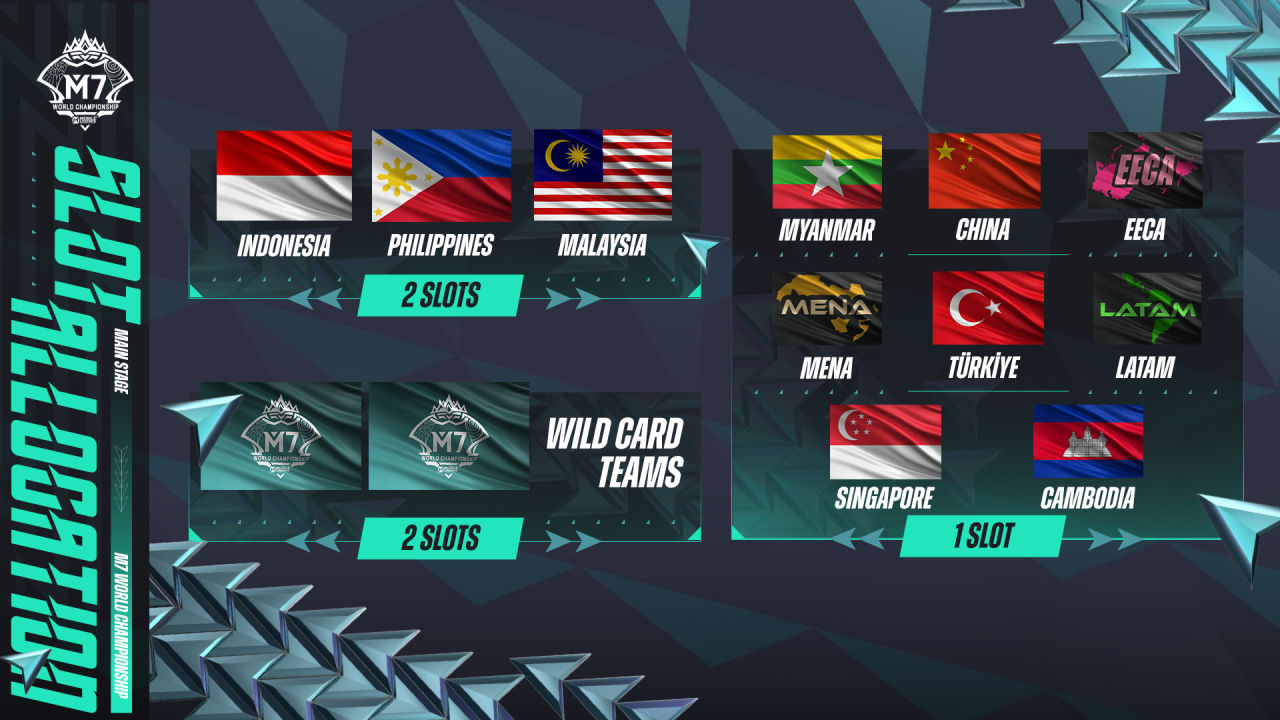
One of the most exciting trends in the current M7 cycle is the meteoric rise of teams from the Middle East and the Eurasian territories. In the past, these regions were seen as “wildcards” that lacked the infrastructure and historical experience of the Southeast Asian giants.
Now, significant investment in local leagues and professional coaching has transformed these teams into legitimate threats to the established global order and the trophy.
Their ability to qualify through brutal international wildcard tournaments shows that their core philosophy of disciplined play is now world-class and ready for Jakarta. It is a move to “globalize the stage” by bringing a fresh and unpredictable meta to the highest level of competitive mobile gaming.
A. Monitoring the dominant start from the leading teams in the MENA region as they lock in early tournament spots with disciplined team fighting.
B. Tracking the integration of international analysts into these rosters to bridge the information gap and improve their macro-level decision-making.
C. Observing the resurgence of the Eurasian teams as they reclaim their status as a tactical powerhouse capable of outthinking any regional opponent.
D. Investigating the “spoiler” narrative of these emerging regions as they re-enter the international scene with a focus on disrupting the favorites.
The challenge for many analysts is the “data gap” because these teams often play in isolated circuits that are difficult to track with total accuracy. You solve this “knowledge barrier” by watching their individual player streams and focusing on their unique item builds and laning habits before the event.
Think of the emerging meta as a hidden treasure; it is relentless, unpredictable, and requires absolute focus to survive the first encounter in the server. When you embrace the chaos of the international wildcards, you see that the global gap is closing much faster than anyone previously expected.
North American Ambitions And The Quest For Respect
The North American region enters the M7 Jakarta season with a focus on reclamation and a desperate hunger to earn the respect of the global community. In the past, NA teams suffered from inconsistent results and a smaller player base that prevented the development of a truly competitive and deep local scene.
Now, the region has centralized its talent into a few “superteams” that feature a blend of local stars and experienced imports from more established regions.
Their ability to compete at a high level during international invitationals shows that they are no longer just participants, but true contenders for the podium. It is a strategic move to “rebrand the region” by showing that North American grit can overcome any tactical or mechanical disadvantage in the server.
A. Evaluating the dominance of the top North American roster as they maintain their position as the undisputed kings of the Western mobile scene.
B. Tracking the rapid improvement of the regional challengers as they integrate advanced Asian training philosophies into their individual daily routines.
C. Identifying the potential of the North American veteran players who bring championship-winning experience from other mobile titles into the M7 circuit.
D. Observing how the Western fans influence the global narrative with their vocal support for the underdogs who are ready to shock the world.
Many international fans struggle with the “underdog stigma” that often surrounds Western teams when they travel to face the giants of the East in Jakarta. You solve this “reputation wall” by focusing on the specific win conditions that allow North American teams to punish the overconfidence of their rivals.
Think of the NA style as a high-risk gamble; it is bold, aggressive, and requires absolute precision to pull off a massive upset victory. When you look past the history and focus on the current form, you see a region that is more than ready to make its mark.
Conclusion
Strategic competitive orchestration creates true sovereignty by replacing regional pressure with high-performance championship engines. Assigning missions to every tactical execution in Jakarta helps prevent local expectations from dictating your organizational strategy.
This disciplined approach ensures your competitive infrastructure remains an efficient and powerful victory asset. Auditing your team synergy and monitoring the rise of MENA allows you to reclaim operational control.
Strategic strategy management ensures your professional ecosystem acts as a fortress against the intense heat of underdog shifts. This logical framework provides the stability needed for a high-performance lifestyle.
Building for the future requires executing your championship plans with unwavering and total confidence. Sophisticated competitive systems transform your collective skill into a permanent freedom engine.
Long-term excellence starts with the structural decisions you make right now. The future of architecture is defined by the systems you build.